
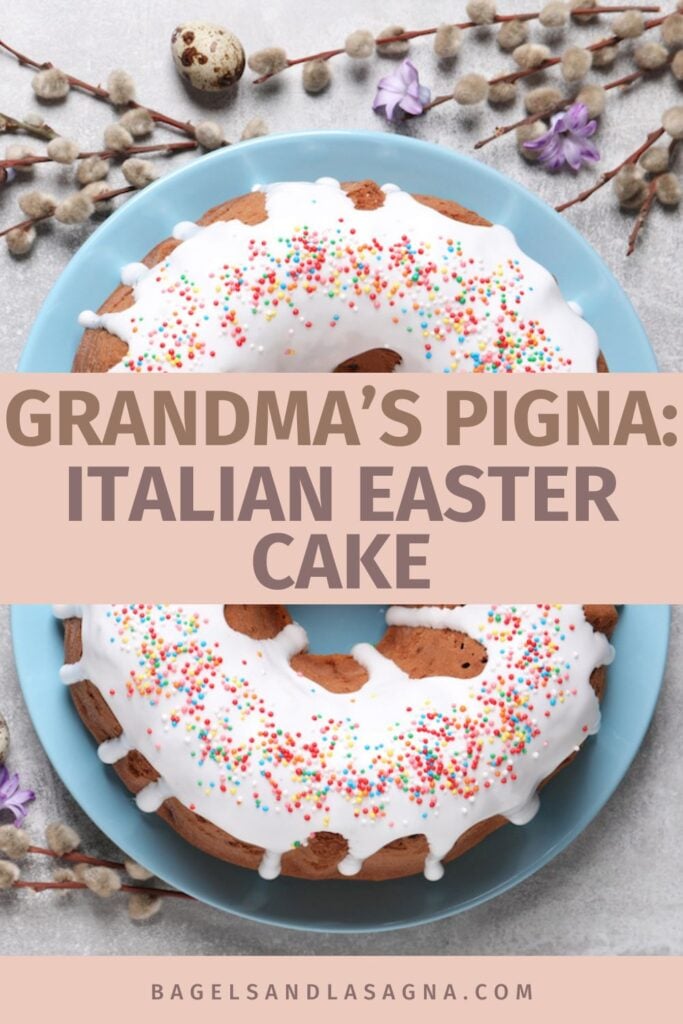
Grandma’s Pigna: Italian Easter Cake
Once a year, Grandma Orie would make an Italian Easter cake. I always looked forward to it. The cake itself is more like a sweeter version of bread, but not too sweet. It gains sweetness, however, from its sugar glaze.

What is Pigna, Italian Easter cake?
This page may contain affiliate links, which means I may be compensated if you click a link. However, there is no cost to you. Also, as an Amazon Associate, I earn from qualifying purchases. For more info, please see my Privacy and Disclosure page.
The full official name of this Italian Easter cake is Pigna di Pasqua. Pasqua is Italian for Easter.
However, Pigna is not Italian for cake. Instead, it is a region in Italy and the word roughly translates to pine cone or just cone to describe the shape of an Easter Pigna. However, in my family, our Easter cake often took on a very different shape.
Pigna with baked eggs
The cakes I remember growing up were typically shaped in a ring. Borrowing from the tradition of Italian Easter bread, she would often place whole eggs in the cake.
While revisiting this recipe, I discovered other families who took my grandmother’s approach. However, they went a step further and dyed their Easter eggs before adding them to the Pigna batter. Grandma Orie just placed regular eggs, not even hard boiled, in the dough and baked them all at once.
Other families might braid their Pigna so that it almost looks like a challah that Leah’s grandmother Yetta would have made for Shabbat.
Truth be told, I never loved the baked eggs whole inside the bread. So, I generally omit this feature when I make our Pigna. My Pigna looks a little less festive this way, but I’m OK with it. We just add colorful sprinkles and then garnish the plate with jelly beans to put the festive back into the Pigna.
Another Italian specialty worth trying. Bomboloni or Italian donuts, or Italian almond cake.

Why you will love this pigna recipe
- This Easter cake recipe is simple;
- The anise seeds add a touch of savory to the not-too-sweet cake;
- The elegant Pigna will certainly impress your guests once it is time to serve dessert.
Ingredients You Will Need

Ingredients
For the Cake
- 4 1/2 cups all purpose flour sifted
- 1 cup sugar
- 4 teaspoon baking powder
- 6 large eggs beaten
- 1/2 teaspoon salt
- 2 1/2 teaspoon anise seed
- 1 cup butter melted
- 1/2 teaspoon vanilla
For the Glaze
- 2 cups powdered sugar
- 2 tablespoon milk substitute water if you have no milk
- 1/2 teaspoon vanilla
- 3 tablespoon colored sprinkles optional
Instructions
For the Cake
- Preheat the oven to 300 F.
- Either by hand or in your mixer with the paddle attachment, cream the sugar and butter.
- Add the beaten eggs, anise and vanilla to the butter and sugar.
- In a separate bowl, combine the dry ingredients: salt, baking powder and four cups of flour.
- Gradually add the flour mixture to the egg and butter mixture.
- Add the last 1/2 cup of flour until you get a thick batter, not quite the consistency of a soft bread dough.
- Pour the batter into spring form cake pan, bundt cake pan or loaf pan. It will take a little longer for the loaf to cook.
- Bake for about 40-45 minutes, until the cake passes the toothpick test.
For the Glaze
- When the cake comes out of the oven and is cooling, combine the powdered sugar, water or milk and mix until smooth. Add 1/2 teaspoon of vanilla, orange extract or lemon extract if desired.
- Add pastel or primary color sprinkles if using.
- With a small ladle or large spoon, drizzle the glaze over the cake.
Flavor profiles: orange to lemon zest
This recipe for Italian Easter cake includes a half teaspoon of vanilla to flavor the sugar glaze. That’s my preference. However, if you like other flavors, you can substitute or add a similar amount of lemon zest, orange extract or almond extract to the glaze.
Also, a shot of Anisette or Sambuca will surely enhance the anise flavor. If you add more liquid, though, be certain to add a bit more flour to keep the batter’s consistency. You definitely don’t want a runny Pigna batter.
Finally, sample your glaze before you put it on the cake. Too much powdered sugar will make it taste chalky. Add a bit more milk or water to get the perfect consistency.
If you have small children coming to dinner who might not like the strong flavors of this Easter cake, try making something they’ll definitely dig into. I love this Oreo Easter bark. Or try your hand at a sweet dessert charcuterie board.
Storing Your Pigna
Pigna will be good for several days stored in an airtight container in the refrigerator. If you bake whole eggs into your cake, be sure to refrigerate.

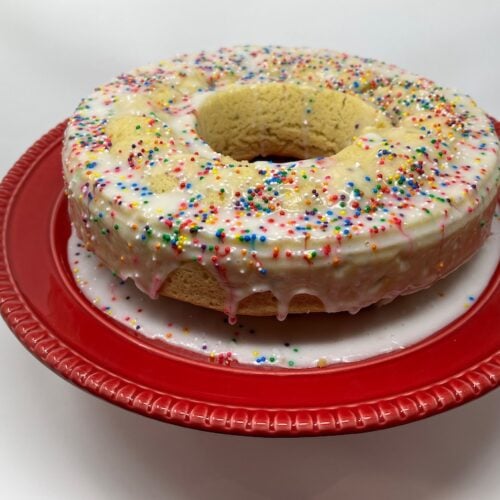
Grandma’s Pigna (Italian Easter Cake)
Ingredients
For the Cake
- 4 1/2 cups all purpose flour Sifted
- 1 cup sugar
- 4 teaspoon baking powder
- 6 large eggs Beaten
- 1/2 teaspoon salt
- 2 1/2 teaspoon anise seed
- 1 cup butter Melted
- 1/2 teaspoon vanilla
For the Glaze
- 2 cups powdered sugar
- 2 tablespoon milk Substitute water if you have no milk
- 1/2 teaspoon vanilla Optional — lemon extracts works too
- 3 tablespoon colored sprinkles Optional
Instructions
For the Cake
- Preheat the oven to 300 F.
- Either by hand or in your mixer with the paddle attachment, cream the sugar and butter.
- Add the beaten eggs, anise and vanilla to the butter and sugar.
- In a separate bowl, combine the salt, baking powder and four cups of flour.
- Gradually add the flour mixture to the egg and butter mixture.
- Add the last 1/2 cup of flour until you get a thick batter, not quite the consistency of a soft bread dough.
- Pour the batter into spring form cake pan, bundt cake pan or loaf pan. It will take a little longer for the loaf to cook.
- Bake for about 40-45 minutes, until the cake passes the toothpick test.
For the Glaze
- When the cake comes out of the oven and is cooling, combine the powdered sugar, water or milk and mix until smooth. Add 1/2 teaspoon of vanilla, orange extract or lemon extract if desired.
- Add sprinkles if using.
- With a small ladle or large spoon, drizzle the glaze over the cake.
Notes
- I love half teaspoon of vanilla for flavoring the sugar glaze. That’s my preference.
- If you like other flavors, you can substitute or add a similar amount of lemon or almond extract to the glaze.
- A shot of Anisette or Sambuca will enhance the anise flavor. If you add more liquid, be certain, though, to add a bit more flour to keep the batter’s consistency. You definitely don’t want a runny Pigna batter.
- Sample your glaze before you put it on the cake. Too much powdered sugar will make it taste chalky. Add a bit more milk or water to get the perfect consistency.
Nutrition
Disclaimer
Please note that nutrient values, if included with the recipe, are estimates only. Variations can occur due to product availability/substitution and manner of food preparation. Nutrition may vary based on methods of origin, preparation, freshness of ingredients, and other factors.