
How to Prevent Dough From Sticking to Your Hands
I can remember making potato latkes for Hanukkah and matzo balls for chicken soup with my grandmother and her sharing her tips for stopping dough from sticking to your hands. In those instances, she always had a bowl of ice water next to her on the counter, ready to dip her hands in. Before patting a latke or rolling a matzo ball, she would dip her hands in the ice water. It was a simple kitchen hack that worked for those two dishes.
How to Prevent Dough From Sticking to Your Hands
This page may contain affiliate links, which means I may be compensated if you click a link. However, there is no cost to you. Also, as an Amazon Associate, I earn from qualifying purchases. For more info, please see my Privacy and Disclosure page.
Recently, though, while making the Crock Pot sourdough bread without starter, I tried the same technique. Unfortunately, it did not work, possibly because the dough itself was so wet. Eventually, I figured out that coating my hands in canola oil would do the trick and that’s how I was able to shape that very sticky ball of dough into a loaf so I could bake it in the slow cooker crock.
But it got me thinking: I can’t be the only person who has had dough stick to their hands while baking or cooking. Or the only person who had always relied on one method for keeping dough off my hands, only to discover that the method doesn’t work for every recipe. So I did a deep dive on methods for preventing dough from sticking to your hands. I did this research so you don’t have to. Hopefully, you’ll find some helpful tips in this article.

Why Dough Sticks To Your Hands
Dough can stick to your hands for several reasons. A big one is moisture content, like the dough I worked with for my Crock Pot sourdough bread. More moisture in the dough means stickier dough.
Another biggie? Dough temperature. Warm dough tends to be stickier. With my Crock Pot sourdough, I started to work with it after it had been in a warm spot to rise. That makes sense. When dough becomes too warm before baking, it can be harder to work with. Conversely, this is why you chill cookie dough before working with it. Cold dough is much easier to manipulate.
Flour also plays a big part in whether dough sticks or not. And that would be the kind of flour you’re using as well as whether or not you’ve floured your work surface. Regarding the types of flour, here are some things to consider.
Flour Types
Certain types of flour tend to be stickier due to their protein and gluten content. Here are some flour types that are generally stickier:
- Bread Flour: This flour has a high protein content (typically around 12-14%), which leads to more gluten development. While it can produce a strong dough, it can also be quite sticky, especially if too much water is added.
- All-Purpose Flour: This flour has a moderate protein content (about 10-12%) and can be sticky depending on the hydration level of the dough. It is versatile but can become sticky if used in wetter recipes.
- Cake Flour: With a lower protein content (around 7-9%), cake flour is less sticky than bread flour but can still be sticky in certain applications, especially if the batter is too wet.
- Whole Wheat Flour: This flour contains the entire wheat kernel, which can lead to a stickier dough due to the bran and germ components. It also absorbs more moisture than white flour.
- Gluten-Free Flours: Many gluten-free flours (like low-carb and keto flours like almond flour or coconut flour) can also be sticky, especially when combined with liquids. They often require additional binding agents to help manage stickiness.
Methods to Prevent Dough from Sticking to Hands
Sticky dough can be frustrating to work with, but several effective techniques can help keep your hands cleaner and your dough manageable. These methods use common kitchen ingredients and simple tricks. Hopefully one of these will work for you.
Using Flour as a Non-Stick Agent
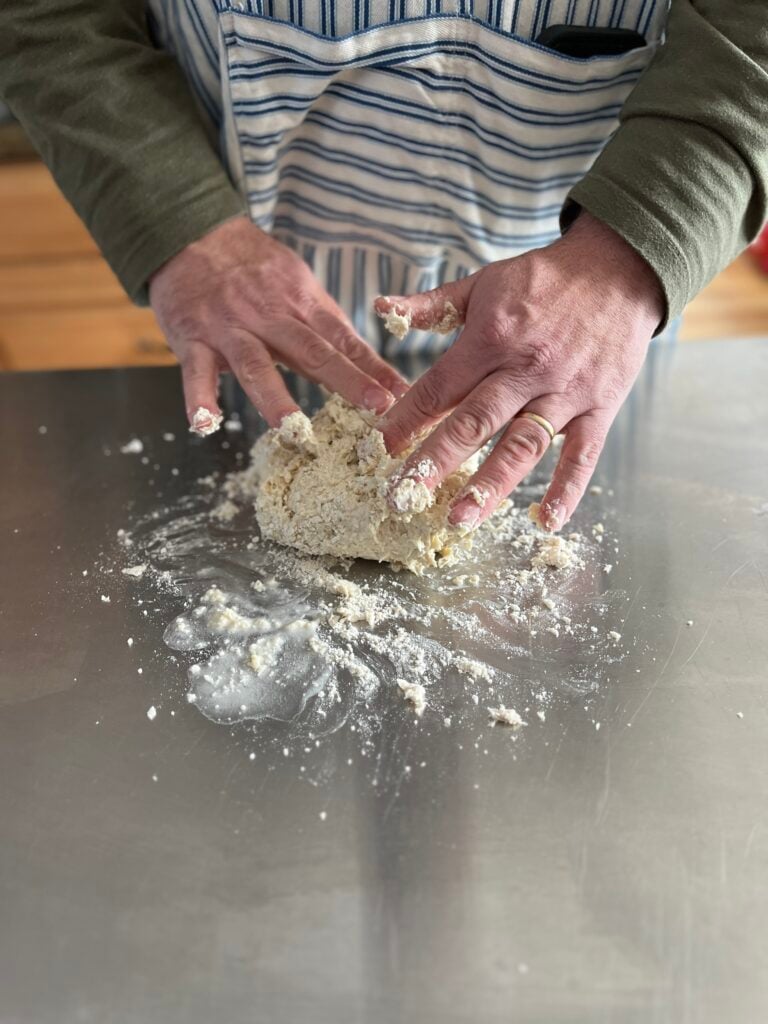
Flour is the most traditional and readily available solution for preventing dough from sticking to your hands. Dust your hands and work surface generously with flour before handling the dough. This creates a dry layer that absorbs excess moisture from the dough’s surface.
Be cautious not to add too much flour, as it can alter the dough’s texture and flavor. If you find yourself continually adding flour, your dough may be too wet and need adjustment.
The Role of Cooking Oil in Dough Handling
Cooking oil provides an excellent barrier between your hands and sticky dough. It’s particularly useful for enriched doughs that already contain fats. To use this method:
- Pour a small amount of neutral-flavored oil into your palm
- Rub your hands together to coat them lightly
- Handle the dough as needed
Oil prevents sticking without drying out the dough like flour can. It’s especially effective for shaping and portioning sticky doughs. Remember to use an oil that won’t impact the flavor of your final product.
Ice Water Immersion Technique
The ice water method is a chef’s secret for handling extremely sticky doughs. It was also my grandmother’s secret weapon for dealing with sticky dough. To use this technique:
- Fill a bowl with ice water
- Dip your hands briefly before working with the dough
- Shake off excess water, leaving hands slightly damp
This method works well for high-hydration doughs like ciabatta or focaccia. The cold water firms up the dough slightly, making it easier to handle. It also keeps the gluten from developing too quickly.
Cooking Gloves
While not a foolproof solution, some cooking gloves can help reduce dough sticking to your hands. for instance, you may notice how many chefs on the Food Network wear black nitrile gloves. These are a big part of practicing food safety. Plus, they protect the chefs’ skin when working with caustic ingredients such as jalapeno peppers. They also work to help dough to stick a little less.
Remember that gloves don’t eliminate sticking entirely. You may still need to use additional techniques like flouring or oiling in conjunction with gloves for the best results. But the barrier they provide that your skin can’t may just be the solution you’re looking for in tackling this sticky — pun intended— situation.
Managing Sticky Situations in Common Recipes
Here’s a quick recap of ways you can prevent dough from sticking to your hands, based on recipes we’ve published on this blog.
- When making cookie dough, chill it before handling. This firms up the butter, making the dough less sticky and easier to shape.
- For sticky pie crusts, use a pastry scraper to handle and fold the dough. This tool helps you manipulate the dough without direct contact.
- If you’re working with bagel dough, use dry flour to clean your hands when it gets too sticky. Gently rub your hands together with flour to remove the gummy residue.