
Different Types of Rice
Navigating the various types of rice goes far beyond Minute Rice or other brands. This is all about rice varieties—from long grain to short grain, white to black and more. This guide simplifies the world of rice, assisting you in selecting the right type for every dish you intend to prepare.
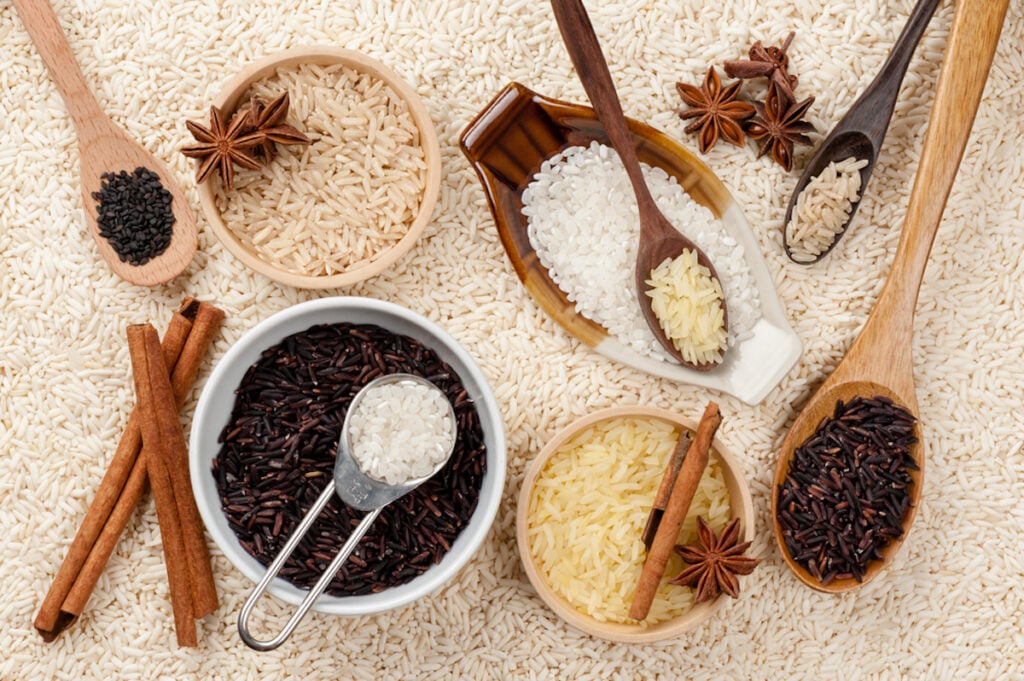
Understanding rice length
This page may contain affiliate links, which means I may be compensated if you click a link. However, there is no cost to you. Also, as an Amazon Associate, I earn from qualifying purchases. For more info, please see my Privacy and Disclosure page.
Before exploring the different varieties of rice, it’s important to understand the basics of rice length. When you categorize rice, it is usually into three primary lengths:
- Long grain — known for its light and fluffy texture, with grains that remain distinct and separate after cooking. Popular long-grain varieties include jasmine and basmati.
- Medium grain — this length cooks into a moist and tender consistency. Arborio and carnaroli are well-known medium-grain rice types.
- Short grain — tends to clump together, creating a sticky or glutinous texture, even though all rice varieties are naturally gluten-free. The term glutinous in this context refers to the glue-like quality of the rice, not its gluten content. Glutinous rice, Chinese black rice and Bomba rice are popular short-grain varieties.
Popular types of rice
The wide range of rice varieties can be overwhelming, but there’s no need to memorize them all. This list highlights the most commonly used types of rice, their ideal culinary applications and some delicious recipe options to try in your kitchen. Also, here are tips for freezing cooked rice.
Basmati rice
This is a long-grain Asian indica variety. People love it for its light, nutty flavor and distinct floral aroma. Basmati rice comes in both white and brown varieties. Traditionally cultivated in the Himalayan foothills, it is a staple in Indian and Pakistani dishes like biryani, kheer, and various curries like lamb korma.
Basmati grains are long and slim, capable of tripling in length when cooked. They are known for remaining slender and separate, making them ideal for stuffing, rice salads and desserts like traditional arroz con leche.
To enhance its flavor and reduce cooking time by 20%, soak basmati rice for 30 minutes before cooking. This variety, including the U.S.-grown Texmati, is perfect for absorbing flavors in both savory and sweet dishes, making it a versatile choice for a wide range of recipes.
Here’s a great use of white rice — this French onion rice recipe. What a great side dish.
Jasmine rice
Like basmati, jasmine rice is a popular long-grain variety that is grown in Thailand and Cambodia. Unsurprisingly, it pairs well with Thai and Southeast Asian cuisine. It is characterized by a nutty and pleasantly aromatic profile, with a floral scent that gives it its name.
While the grains are slightly shorter than basmati rice, jasmine rice is versatile enough to be used interchangeably in recipes. This rice cooks up moist with a soft texture, making it perfect for dishes that pair well with its distinct flavors, such as coconut rice, Mexican ground beef skillet or a chicken and rice casserole. Available in both white and brown varieties, jasmine rice is commonly used as a side for meats, fish and stir-fries. Also, it is a key ingredient in dishes like pilafs, rice salads and fried rice.
We’ll often cook Jasmine rice in our Instant Pot. It always comes out perfectly.
Wild rice
Contrary to its name, wild rice is not actually rice but a type of grass. It’s predominantly found in shallow waters of lakes and slow-flowing streams across North America, including the Great Lakes region and parts of Canada. Distinguished by a chewy outer sheath and tender inner grain, wild rice is rich in protein and fiber and has a low glycemic index.
Available in varieties such as Northern wild rice, Texas wild rice and Manchurian wild rice, it is commonly used in side dishes, salads, soups and as a chewier alternative to bread in stuffings. Wild rice adds a nutty, earthy flavor to dishes, but cooking it requires patience, as it is a tough seed that absorbs water slowly and can take up to an hour to cook fully. It’s best prepared like pasta—boil it in plenty of salted water so it can expand to triple its size when cooked.
Arborio rice
If you’re making Italian risotto, then you’re using this Italian short-grain rice and its companion, carnaroli rice. Some people use this type of rice for rice pudding, too. This rice variety is short and stubby, and thanks to its high starch content, it offers a luxuriously creamy texture when cooked. Never rinse arborio or carnaroli rice before cooking. You need those starches for the perfect creamy risotto.
It’s not just an Italian thing; arborio rice is also grown in places like California and Texas. Cooking it is somewhat of an art: add liquid slowly and cook it just enough to maintain an al dente texture. It’s a bit of a wait, but entirely worth it for that creamy, decadent bite.
Black rice
Distinct from wild rice despite looking similar, black rice is a unique variety of the Oryza sativa L. Often called forbidden rice, it gets its striking black color from anthocyanin, the same antioxidant found in blueberries and blackberries.
Known for its high protein and iron content, black rice is almost always whole grain and offers an earthy, nutty flavor. It typically requires about an hour to cook. This variety is similar to other long-grain rice and works wonderfully in dishes like tofu and veggie bowls.
Glutinous rice
This type of rice, known for its softness and high starch content, is ideal for dishes that require a compact and sticky texture, such as sushi or onigiri. Glutinous rice is often used interchangeably with Japanese glutinous rice; however, the Japanese variety is just one type of glutinous rice, as there are many others. To cook sticky rice properly, it is best to steam it in a bamboo basket after a long soak—preferably overnight. This is the basis for the Thai dessert of mango and sticky rice.
Brown rice
Any type of rice can have a brown rice variant; it’s simply the same grain with the outer hull intact. This makes it a whole grain, providing a nuttier flavor and chewy texture. Because brown rice is a whole grain, it takes longer to cook than white rice. With the bran and germ intact, brown rice offers a hearty, nutty taste and texture.
“I love using brown rice when I cook, not only because it’s higher in fiber than white rice and therefore keeps me full longer, but also because of the chewy texture,” says Anne Mauney, MPH, RD who writes the fANNEtastic food blog. “The only thing I don’t love about brown rice is how long it takes to cook, so I usually keep a couple packets of 90-second microwave brown rice in the pantry for days when I’m in a hurry.”
The last word on rice
As you can see, there’s a lot more than basmati in the world of rice. From fluffy jasmine to unique and exotic black rice, there’s a variety for any occasion. Whether you’re making a creamy risotto or serving with your favorite curry, there’s a type of rice perfect for your dish.
Portions of this article originally appeared on Food Drink Life.