
How to Make Meringue
Meringue is a seemingly simple treat made from whipped egg whites and sugar. While it may appear straightforward, it provides a range of textures and applications in the culinary realm. Whether you need a light, airy topping for a pie, a sturdy base for a pavlova, or a glossy icing for a cake, there is a technique that will suit your baking requirements perfectly.
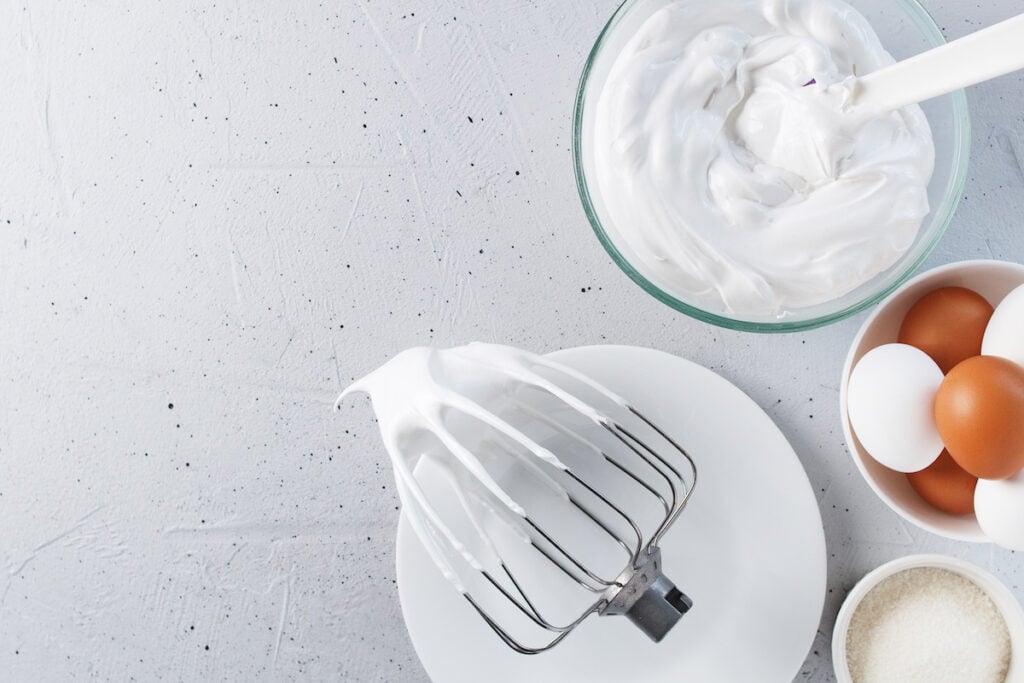
What is meringue
This page may contain affiliate links, which means I may be compensated if you click a link. However, there is no cost to you. Also, as an Amazon Associate, I earn from qualifying purchases. For more info, please see my Privacy and Disclosure page.
Meringue is the result of using sugar to stabilize and sweeten beaten egg whites. These whipped egg whites serve as leaveners for souffles, sponge cakes and waffle batters and give mousse its light, airy texture. We learned, when making my grandmother’s Passover honey sponge cake, that when you do not whip the eggs enough into a meringue, you end up with a flat cake. But I digress.
In technical terms, the proteins in the egg whites are denatured and coagulated to transform from a thick gelatinous goo into a light, fluffy foam. Adding sugar to the whipped egg whites causes the foam to take on a more stable structure that can hold stiff or firm peaks and retain their shape longer.

Types and techniques
There are three main types of meringue, each with its own distinct characteristics and preparation methods:
- French
- Italian
- Swiss
All three varieties share the same basic ingredients:
- egg whites
- sugar
- an optional acid like lemon juice, vinegar or cream of tartar.
The method you choose will depend on the intended application, although some uses can accommodate multiple techniques.
How to make French meringue

Common or French meringue is the least stable type. To make it, beat the egg whites until frothy, then add the sugar in either a gradual stream or small doses until it is fully incorporated. The egg whites can then be whipped to soft, medium or stiff peaks as needed for your recipe.
French meringue does not require cooking, so the egg whites remain raw. Therefore, it is best only in applications where it is added to something that will be further cooked, such as a show-stopping Pavlova, airy angel food cake or luscious lemon meringue pie.
How to make Swiss meringue
More stable than French meringue, Swiss meringue is prepared by heating the egg whites and sugar together before whipping. To create Swiss meringue, combine the egg whites and sugar in a mixing bowl and set it over simmering water. Continuously whisk the mixture until the sugar has dissolved and the temperature reaches at least 140 F. Next, transfer the bowl to your mixer and whip on medium to medium-high speed until you reach the desired peaks. It’s great to put atop a lemon meringue cake.
Swiss meringue is a cooked version. However, 140 F is not hot enough to eat safely without further baking. If you use this meringue to top a baked tart, it is fine to stop at 140 F. However, if you use it to make Swiss buttercream icing, you must cook the egg whites to at least 165 F.
Swiss meringue is often considered the easiest preparation method. However, it also offers the greatest margin for error when whipping to stiff peaks. This type of meringue can be used in many recipes that require French meringue, and if cooked to a sufficiently high temperature, it can also be suitable for unbaked applications.
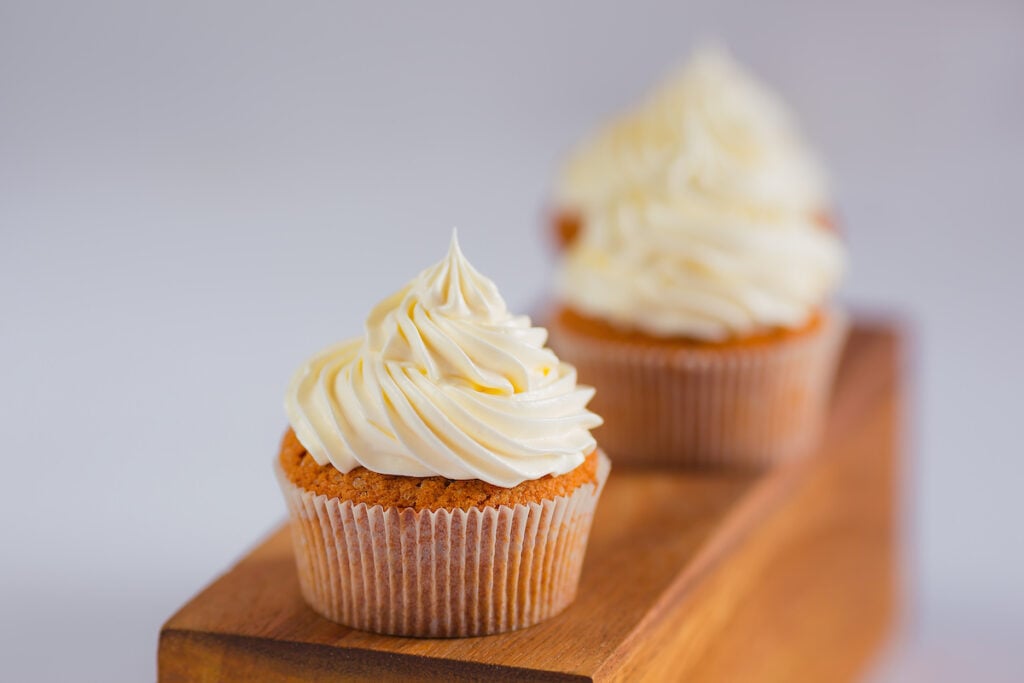
“Swiss meringue is my favorite when it comes to topping cream pies. I prefer it over the uncooked meringue because it’s more stable and doesn’t weep or deflate,” says Jere’ Cassidy of One Hot Oven. “The meringue turns out beautifully white. You can turn this meringue into an amazing buttercream icing too.”
Speaking of buttercream, here is a delicious buttercream frosting recipe you’ll want to try, whether or not you’re making it with meringue or not.
Making Italian meringue
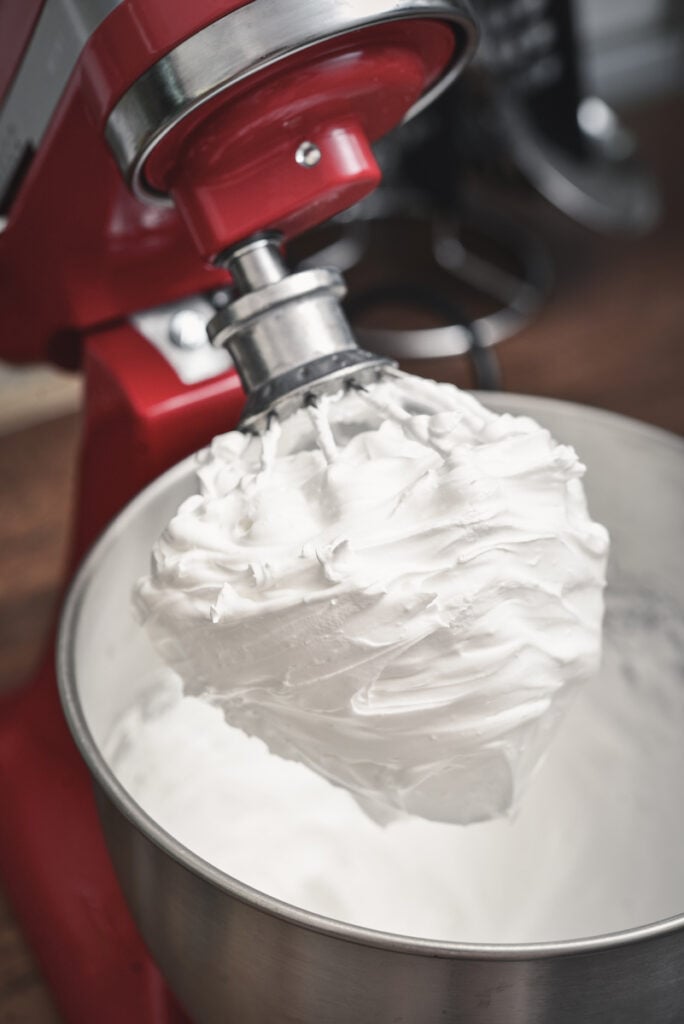
The most stable of the three primary types, Italian meringue is made by whipping hot sugar syrup into egg whites. To prepare it, combine three-quarters of the sugar with half as much water by volume to create a sugar syrup. Heat this syrup until it reaches 240 F.
At the same time, mix the remaining sugar with the egg whites and beat to soft peaks. Once the sugar syrup has reached the correct temperature, gradually pour it into the whipped egg whites while the mixer is running. After it’s fully incorporated, continue to beat until you achieve the desired peaks.
Italian meringue is the most demanding, requiring careful timing and safe handling of extremely hot sugar syrup. It produces glossy voluminous peaks that hold more successfully for longer periods of time.
Italian meringue is fully cooked and ideal for baked applications, but it can also be used in unbaked recipes such as ice cream bases, piped into decorative shapes, or for making Italian buttercream. Additionally, Italian meringue serves as a homemade substitute for marshmallow crème.
What you need to know about meringue powder
Meringue powder is a processed baking ingredient commonly found in the baking aisle and is becoming increasingly popular in the average baker’s pantry. It is created by dehydrating pasteurized egg whites, mixing them with sugar, and typically adding emulsifiers, stabilizers, and artificial flavors.
Meringue powder serves as a substitute for traditional meringue and is often recommended for recipes that do not require baking or cooking. However, it is not suitable for those avoiding eggs. Additionally, the extra additives found in many mainstream brands classify it as an ultra-processed food. To use meringue powder, simply reconstitute it with water according to the instructions in your recipe or on the product packaging.
Additional tips
When preparing meringue from scratch, there are some essential guidelines to follow for perfect results. Here are six tips to ensure your success.
- You must be very careful when separating the egg whites and yolks, as even the smallest amount of yolk can prevent the egg whites from foaming correctly. Use the leftover egg yolks to make a fancy creme brulee or luscious lemon curd. Alternatively, you can add them to your morning omelet for an extra flavor boost.
- Egg whites separate best when cold but whip most successfully at room temperature. You can let the egg whites sit out to come up to temp after separating them or gently heat them over simmering water until around 70 F.
- The bowl and whip must be completely clean and free of grease. Often, bakers wipe the equipment with vinegar and then rinse with very hot water to ensure all traces of fat are gone.
- The egg whites will expand in volume between eight and ten times their un-whipped size. Ensure your mixing bowl is not overloaded and has room for the egg whites to whip properly.
- Acids like vinegar, lemon or cream of tartar can help stabilize the whipped egg whites further and can also serve to temper the sweetness of the meringues. It’s optional, but if you include it or other flavor enhancers like vanilla, add them before whipping.
- Patience is key. Start the mixer on low until the egg whites start to foam, then increase the speed. Stop the mixer when they reach soft, medium or firm peaks, as desired. If you continue to whip the egg whites after reaching firm peaks, they can collapse and take on a dull, grainy texture.
Portions of this article originally appeared on Food Drink Life.