
Different Kinds of Cabbage
You may not realize it but there are many different kinds of cabbage. This unassuming cruciferous leafy green — but not always green — vegetable comes in a variety of shapes, sizes and flavors. Read on to discover some of the most popular types of cabbage and creative ways to use them in meals.
Different kinds of cabbage
This page may contain affiliate links, which means I may be compensated if you click a link. However, there is no cost to you. Also, as an Amazon Associate, I earn from qualifying purchases. For more info, please see my Privacy and Disclosure page.
Cabbage is a leafy vegetable belonging to the Brassica family along with other notable crucifers like broccoli, radishes and kale. It really is the vegetable stepchild that is often overlooked in home kitchens. No place is this truer than in the United States where cabbage has an unfortunate reputation as a smelly, overcooked vegetable relegated to St. Patrick’s Day celebrations where, every March 17, it is always corned beef’s sidekick.
Cabbage deserves so much better. Once you discover the various types of this vegetable that you can find at the local grocery store or farmer’s market and learn easy and delicious ways to cook it, I’ll bet you’ll change your mind. Just take Bill as an example. Never in our decades of marriage would he eat Brussels sprouts, which are in the cabbage family. But one time they came with a meal kit that provided steps for roasted them in the oven. They were amazing, Bill gobbled them up and now he’ll order them in restaurants of his own free will.
Green cabbage
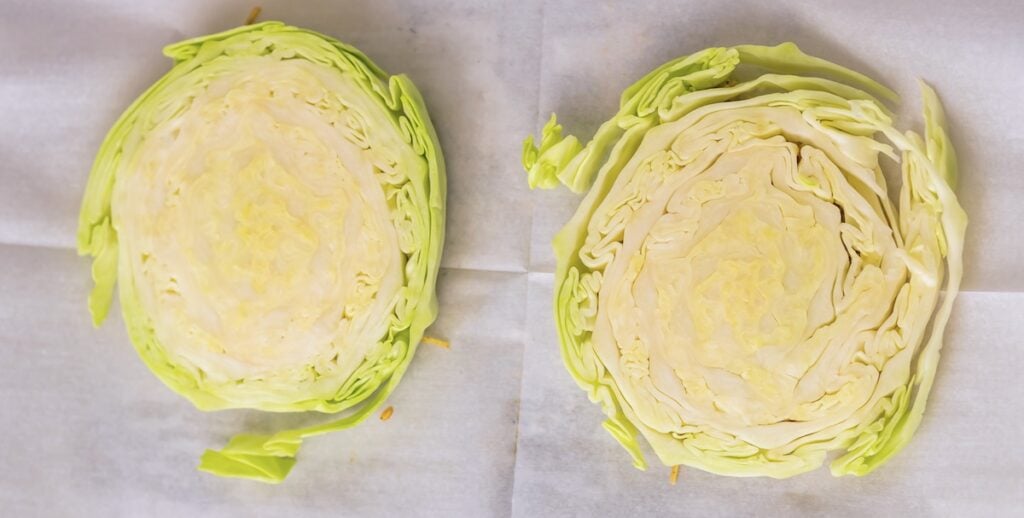
Green cabbage is classic and the most widely found and used kind of cabbage. If you’re looking for a basic workhorse, this is the type for you. The outer leaves range from dark green to a pale hue while the inner smaller leaves are almost white. You’ll see this variety used most often in coleslaws, cabbage rolls, cabbage soup and even homemade sauerkraut.
“For years our family has made our own recipe for making sauerkraut,” says Zuzana Paar of Lowcarb-Nocarb. “It’s my favorite way to use cabbage.”
Red or purple cabbage
Red cabbage is very similar to the green kind. Anything you do with green you can do with the red or purple kind. Red cabbage is classically used as a pickled topping for things like tacos or BBQ sandwiches. It’s also often paired with sweet ingredients like apples and raisins and is delicious when served with pork chops or duck. Try fermenting it for all the benefits of naturally occurring probiotics
Napa cabbage
Napa, sometimes called Chinese cabbage, is the most tender of all the types. It’s yellow-green with an oblong shape and leaves that are tightly packed together. The inner ribs are much less substantial than the red and green varieties making napa a great choice for more delicate preparations.
It is the most lettuce-like of all the varieties. Its flavor is mild with a nice crispy and fresh texture. One of the most simple ways to enjoy this variety is to thinly slice then dress lightly with an oil, acid and seasoning of your choice. It’s commonly used in Asian stir-fries, traditional fermentations like kimchi as well as soups.
Savoy cabbage
Of all the types of cabbage, Savoy is the most noteworthy in appearance. Originating from the Mediterranean region — people still debate if it is French or Italian — the green leaves have a striking crinkled appearance, almost waffle-like in nature. The leaves make Savoy a great candidate for cabbage rolls or dumplings.
Pointed cabbage
Pointed cabbage, also called hispi cabbage, is a kind you can find at farmers’ markets during the season. It’s more tender and sweeter tasting than green cabbage, so it’s a good choice for quick and easy dishes like stir-fries or skillet meals. Also, it’s a fast side dish. Just slice a pointed cabbage in half, brush it with oil or butter and roast in the oven.
“Cabbage is a staple for several traditional Filipino dishes my family serves on special occasions,” says Lisa MarcAurele of Little Bit Recipes. “It’s a key ingredient that adds flavor in both pancit and lumpia.”
Brussels sprouts
With the proper preparation method, Brussels sprouts are some of the most delicious of all the cabbage varieties. Their innate nutty and slightly sweet flavor is highlighted best by roasting and they caramelize beautifully in the process. They’re also exceptional when thinly sliced and sauteed in butter or grated finely and tossed into salads with a touch of honey.
Brussels sprouts are grown on stalks and can sometimes be found sold this way during the fall and winter seasons. Roasting a whole Brussels sprout stalk makes quite the statement on any holiday table.
Bok choy
Bok choy goes by a few names, including Chinese cabbage and pak choi. Unlike other kinds and varieties, it does not grow into a round or oblong shape. Instead, you’ll find leaves that flower out of the bulb. Sliced and sauteed, these leaves are delicious in most stir fry dishes or noodle dishes such as Singapore noodles. Bok choy is what gives the dish a nice crunch. Also, once you make bok choy, keep the bulb and soak in water. It is super easy to grow new bok choy from kitchen scraps like I did in the photo here.

Portions of this article originally appeared on Food Drink Life.