
Primer on Sheet Pans
Baking sheets, also known as baking trays or sheet pans, are essential kitchen pans for home bakers, home cooks and professional kitchens alike. Versatile and useful, these pans can do everything from baking and roasting to serving and so much more.
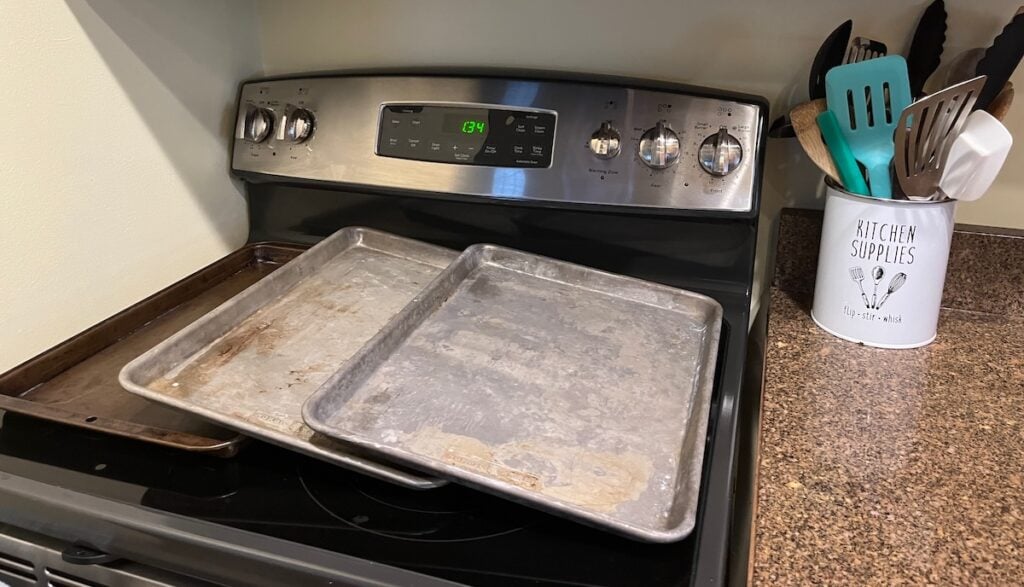
But what size sheet pans are really needed in the kitchen? It can be overwhelming to look at pans in the store; there are a lot of sizes out there. A closer look at the needs of the kitchen and storage options will help in the decision-making.
What are sheet pans
This page may contain affiliate links, which means I may be compensated if you click a link. However, there is no cost to you. Also, as an Amazon Associate, I earn from qualifying purchases. For more info, please see my Privacy and Disclosure page.
A sheet pan, also known as a baking tray or baking sheet, is a flat, rectangular metal pan used in an oven. It is often used for baking bread rolls, pastries, Swiss rolls and pizzas. These pans, usually made from aluminum or stainless steel, have a shallow outer rim around all four edges to prevent foods from sliding or dripping off.
What to bake or make in sheet pans
Wondering what to bake on a sheet pan? Think sheet cakes, cookies, jelly rolls, pastries and more. They’re great for pizzas or bread, too. Almost anything you can bake in your oven can be baked on one of these.
Sheet pans are not limited to making pastries. You can cook dinner dishes like crispy roasted vegetables, roasted meats and even baked bacon. In fact, for many cooks, a sheet pan dinner has become synonymous with one-pan or one-pot dinners, like our One Pot Steak and Black Bean Chili or Cheesy Sausage and Rice Casserole.
Many different pans are needed in the kitchen, but none, except maybe the Dutch oven, is as versatile as a sheet pan. Whether you’re baking or roasting, the rimmed edges of a good sheet pan keep your food from dripping or slipping off the pan.
One tip for using these pans for cooking or baking is to try to get two separate pans so that your cookies don’t taste like jerky at some point. Of course, you can use parchment paper or foil on these pans as well, but it is nice to have two for different food flavors.
Common sizes
Shopping for these pans for home bakers typically comes down to two sizes available in most grocery stores: 11-by-17 or 10-by-15. These sheets can be used in all the ways mentioned above and are just so handy.
Common sizes for professional bakers are more standardized and generally bigger for commercial ovens. But some homes have ovens that are big enough to fit up to the medium size of these professional pans.
“I use my half-sheet baking sheet almost daily,” says Erin Dooner, Texanerin Baking. “It’s great for making sheet-pan dinners, sides and cookies. It’s exactly twice the size of a 9-inch by 13-inch pan. So, I also use it when making a large number of brownies and other treats for bake sales and holidays.”
I’ve offered all three common sizes of sheet pans. However, keep this in mind: Most home ovens are too small to fit a full sheet pan size, with enough room left in the oven for proper air circulation. So chances are you already own or will want to buy a quarter or half sheet pan size.
Which size is best? This is entirely up to the user, their preferred pan and of course storage in the home. The bigger pans require a bigger cupboard or storage system. It’s definitely something to think about before purchasing pans.
“As a large family who loves to cook and bake, we use baking sheets constantly,” says Sarita Harbour of An Off Grid Life. “We use the 9-inch by 13-inch for our narrow propane wall ovens. Most days, we’re making bacon on parchment-covered cookie sheets and baking cookies or roasting vegetables on them.”
Care and cleaning
Proper care and cleaning are crucial to extend the life of your baking sheets and ensure they remain safe and effective for cooking and baking. Using foil or parchment paper can lessen the chance of food becoming stuck on the pan since non-stick sprays don’t always work.
Here are some tips for the best cleaning. For best results, follow the manufacturer’s directions.
- After each use: Let the sheet cool completely before cleaning. Wash it by hand with warm, soapy water. Avoid using abrasive cleaners or scrubbers, which can scratch the surface, especially on non-stick pans.
- Removing stubborn residues: For baked-on food or crispy roasted vegetables, soak the sheet in warm, soapy water for a few hours, then gently scrub. Alternatively, you can make a paste of baking soda and water, apply it to the stained area, and scrub after a few minutes.
- Dishwasher use: While many modern baking sheets are dishwasher safe, frequent dishwasher use can shorten their lifespan. The high heat and harsh detergents can cause warping and deterioration of the non-stick coating.
- Storage: Store your baking sheets in a dry place. Stacking them with a layer of paper towel or cloth in between can prevent scratches. Standing them on their sides works well for storage, too.
Final thoughts
The versatility and practicality of sheet pans make them indispensable in both home and professional kitchens. Choosing the right size depends on your cooking needs and available storage space. Having several sizes available to use makes them even more essential in the kitchen.
Whether you’re baking a batch of cookies, roasting vegetables or preparing a sheet pan dinner like our Sheet Pan Roasted Chicken Breast with Fresh Veggies or Sheet Pan Lemon Garlic Chicken Thighs, these kitchen workhorses are crucial for a variety of culinary endeavors. With the right care and selection, your sheet pans will be reliable companions in your cooking adventures.
This post first appeared on Food Drink Life.