
Pasta Water Uses
You’ve probably cooked thousands of pots of pasta in your lifetime and dumped the residual water as you drained your spaghetti, rotini or whatever macaroni you were cooking. However, did you ever stop to think about the ways you could reuse that water from the pot without wasting it? I’m not pulling your leg. There are many legit pasta water uses. Read on to learn what they are.
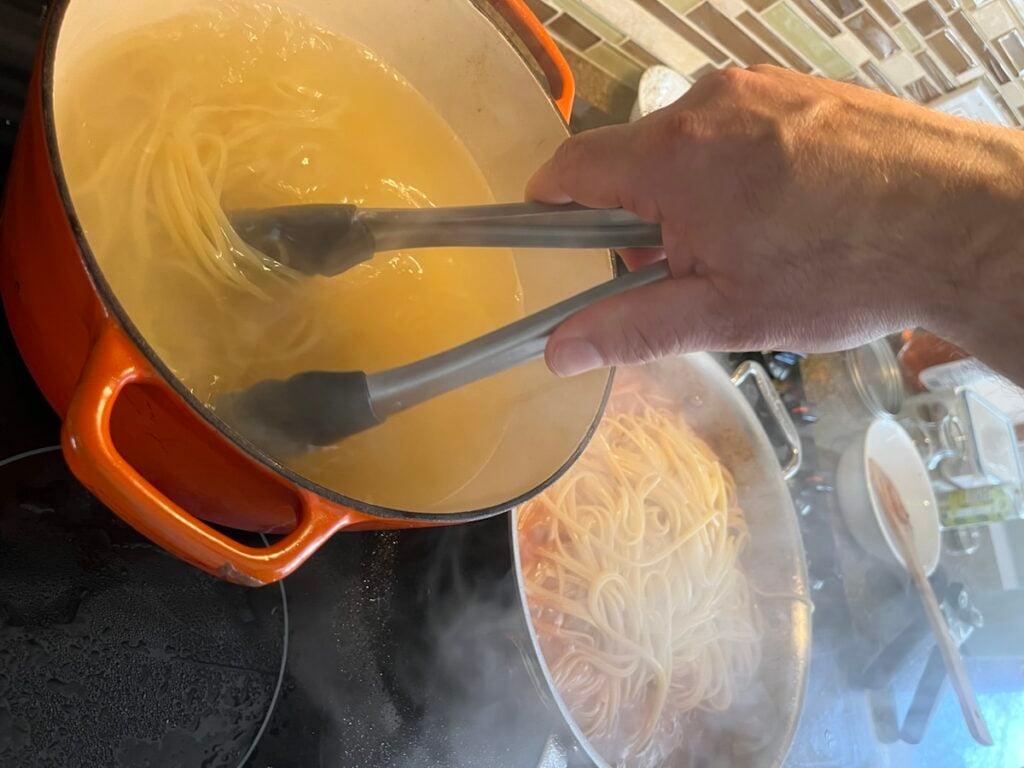
Why pasta water is liquid gold
This page may contain affiliate links, which means I may be compensated if you click a link. However, there is no cost to you. Also, as an Amazon Associate, I earn from qualifying purchases. For more info, please see my Privacy and Disclosure page.
If you’re confused, let’s clear things up. Here’s why you should never discard your pasta cooking water and the many ways you could be using it.
First of all, you may not realize it but pasta water is a natural thickener. The starch from the pasta that you cooked in the water helps bind and thicken sauces. It also helps the sauce stick to the pasta better. It’s why our recipe for easy pasta puttanesca includes specific tips for using the pasta water in the saucepan where you’re cooking spaghetti alla puttanesca. Second, it’s a flavor booster. All that salty water is a great way to add flavor to your pasta sauce.
Third, pasta water is like a magical science experiment in that it allows seemingly incongruous ingredients to combine easily — things like oil and water, or butter and cheese. This creates a silky, creamy sauce like you are used to getting in restaurants. Fourth, it’s budget friendly because it does all the above while saving on cream and butter. You get a lot of creaminess without the added dairy. In some cases, this even means fewer calories.

When and how to use pasta cooking water
Always reserve at least a full cup of pasta water before you drain your pasta. Add pasta water while the sauce is hot and still cooking to help the starch emulsify properly with fats like oil, butter or cheese. Add just a splash at a time and stir vigorously to create that silky cohesive texture.
For cream-based or cheese-based sauces, add pasta water just before or as you toss in the pasta. For tomato sauces, add it as you simmer to mellow acidity and help the sauce cling to the pasta.
What dishes to use it in
The best pasta sauces to use pasta water in are dishes with classic sauces, such as cacio e pepe, Alfredo sauce, pesto, tomato-based sauces or one-pot pastas or risottos. But the number one dish you should always use pasta water for is pasta alla carbonara. The pasta water makes this entire dish. Never use regular water for carbonara.
Pro tips
Want to get the most out of your pasta water? These quick pro tips will help you salt, save and stir like a pasta pro.
- Add 1 tablespoon of salt for every 4 quarts or 16 cups of water as a general rule of thumb.
- Use kosher salt if possible because it dissolves well and isn’t as sharp as table salt.
- Salt the water after it boils, not before, so it dissolves faster and won’t leave pits in your pot.
- Taste the water to ensure it tastes quite salty but not overwhelmingly so.
- If you are making a saltier dish, reduce the salt in the water as needed. Depending on how salty your other ingredients are, you can cut it by up to half.
Why you should use freshly boiled pasta water
The starch released into the pasta water works best right after boiling. This happens mainly because sitting water lets the starch settle to the bottom, separating from the water. Then it becomes a less valuable ingredient to use.
Warm pasta water will blend more smoothly with fats such as oil, cheese or butter, especially in dishes like pasta alla gricia, where it helps the cheese become a creamy sauce. It also creates a glossier, more cohesive texture than cold water will. Fresh pasta water has the best flavor.
When not to use pasta water
It’s best to avoid using pasta water if you oversalted it. For this reason, it’s always a safe bet to taste the pasta water before use, although you can dilute it with a bit more water if you really need to use it. You also don’t want to use this liquid gold if you overcook the pasta. Overcooked pasta releases excess starch, which can make your sauce sticky or glue-like.
Also, don’t use pasta water when making super-light sauces, such as those that are oil- or herb-based. These types of sauces simply do not benefit from added pasta water because it can make them feel heavier than necessary.
Other uses for pasta water
Boil your vegetables in leftover pasta water instead of regular water. This adds flavor from the salt and helps conserve water. It also helps ingredients like butter stick better to the veggies.
Add some pasta water to soups or stews. While it won’t change them dramatically, it adds a level of thickness and creaminess.
Stop pouring liquid gold down the drain
Now that you know how valuable pasta water can be, it’s time to stop discarding it carelessly. Try saving a cup next time you make pasta and see just how much you can level up your pasta night.
Portions of this article originally appeared on Food Drink Life.