
Making a Roux
When you’re making a roux, you are combining butter and flour to thicken sauces and create deliciously rich consistencies. Learning how to make one and when to use it will help you become a better cook.
What is roux?
This page may contain affiliate links, which means I may be compensated if you click a link. However, there is no cost to you. Also, as an Amazon Associate, I earn from qualifying purchases. For more info, please see my Privacy and Disclosure page.
Roux is short for the French term beurre roux. While beurre is the French word for butter, roux does not mean browned as a literal translation. This phrase seems to have originated in French cuisine. Over time, people shortened it to just roux.
For a traditional roux, you would use clarified butter. However, plenty of cooks use vegetable oils or rendered fats such as bacon grease. Keep in mind that the type of fat you use will impact the final flavor of the dish. Use bacon fat? You’ll get the smokiness of bacon. Cook with unrefined coconut oil? Your dish may be more sweet than savory. These kinds of substitutions can enhance — or ruin — your dish.
The flour component is most often all-purpose wheat flour due to its starch and protein content. Glutinous rice flour can be used as an equal swap to achieve similar results in a gluten-free kitchen. Other wheat flour types will have different ratios of starch and protein, which will affect their thickening capabilities.

Different types
The basic flour and butter roux is one of the most common thickeners in the home kitchen. There are four main types, all of which are named after the color that develops as the flour cooks.
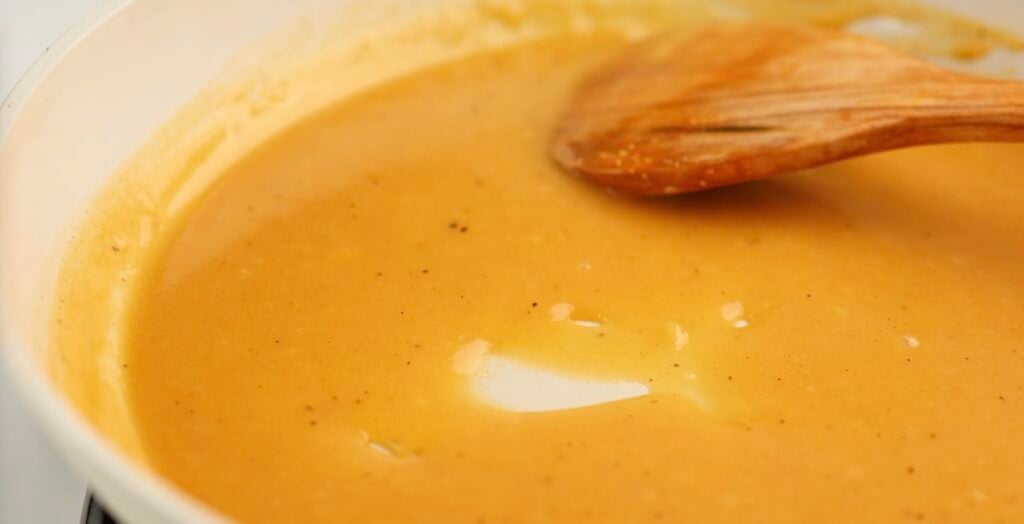
- White roux cooks just long enough to combine the ingredients, resulting in a white to pale yellow color primarily from the butter rather than the cooking process.
- Blonde roux reaches a golden-yellowish color and develops a slightly nutty aroma.
- Brown roux cooks until both its color and aroma deepen.
- Dark roux cooks until it achieves a deep color and a pronounced aroma.
“The secret to a great gumbo is taking the time to whisk the roux until it’s deep and dark, like melted chocolate,” explains Amanda McGrory-Dixon of Burrata and Bubbles. “Some recipes have you stop when it looks like peanut butter, but you need to have patience when making a gumbo roux. You need to cook it low and slow. Don’t be surprised if it takes an hour to get the right color. It’s not something that should be rushed.”
Making roux
You can make a roux using two approaches: the traditional method and the singer method. Here are explanations of how they differ.
Traditional method
Guinness gravy is a great example of a traditional roux. To make this style, heat the fat over a medium flame until fully melted, then whisk in the flour. The texture should resemble smooth wet sand that evenly spreads when you stop whisking. This is the kind of roux I make when making traditional Canadian poutine.
With this method, you should continue cooking and whisking the mixture until it reaches the desired golden color. Keeping it moving in the pan prevents scorching. Once cooked, use it immediately.
Singer method
With the singer method, roux is developed as a built-in step in a recipe rather than made as a separate component to be added to the dish. Butter or oil is often used first to cook vegetables, like in this butternut squash soup, or rendered directly from meat. Flour is then added to the ingredients already in the pan to create a roux that includes the meat or vegetables.
“When I’m making a creamy cheese sauce for mac and cheese, I prefer making the roux first, so I have full control over the sauce’s thickness,” says Michelle Goth of Blackberry Babe. “But, when I’m making a dish like beef stew, I prefer to use the singer method. This is an easy, unfussy way to thicken your sauce.”
Final thoughts
A roux is the combination of fat and flour with heat. If you’ve ever made homemade gravy to serve with a Thanksgiving turkey, then you’re made a roux. Hopefully, now you understand how to make this sauce and when to use it in various recipes.
Portions of this article originally appeared on Food Drink Life.