
DIY Homemade Salad Dressing
Recently, we were getting ready to bring our cold pasta salad with us to a friend’s home. One of the basics of that recipe is using store-bought Italian dressing. However, we were out and out of time to stop by the store to get some. So, Bill threw together a basic vinaigrette salad dressing of olive oil, balsamic vinegar and Italian spices.
It was so delicious that I’m not sure we’re ever going to buy salad dressing again. Which is why I wanted to share with you these ideas for making your own salad dressing. It’s easy, quick and way tastier than anything you can buy at the store. Plus, you know exactly what’s going into it — no weird preservatives or mystery ingredients.
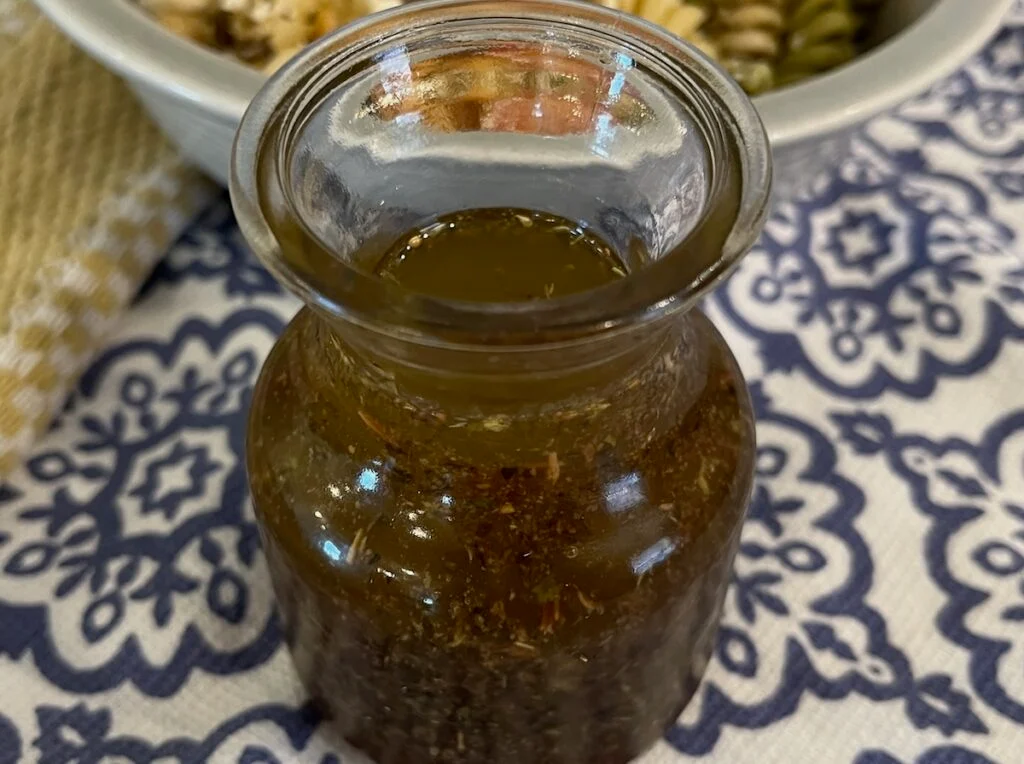
Homemade salad dressing basics
This page may contain affiliate links, which means I may be compensated if you click a link. However, there is no cost to you. Also, as an Amazon Associate, I earn from qualifying purchases. For more info, please see my Privacy and Disclosure page.
At its most basic, salad dressing consists of two main components: oil and acid. While you can add various other ingredients like herbs and seasonings, in a pinch, the right combination of oil and vinegar—or another acid—is all you need.
The most important thing to remember when making homemade salad dressing is not to skimp on the oil. You need enough oil for the emulsion to take shape. Keep in mind that we’re not talking about high smoke point oils or anything, because you’re not heating up the salad dressing.
An emulsified dressing is one in which the oil and vinegar have combined to create a creamy consistency where the vinegar is suspended in the oil. It’s one of the basic food science principles that takes a dressing from good to great.
The proper ratio of oil to acid is 3-to-1. This holds true for any acid, whether it’s a variety of vinegars or citrus juice.
“The flavors in homemade salad dressing have a vibrancy and freshness that store-bought just cannot match. Since I prefer a bold, tangy dressing, I don’t follow the standard oil-to-vinegar ratio when making a vinaigrette; I use equal parts,” says my blogging friend Renee N Gardner of Renee Nicole’s Kitchen. “One of my favorite summer dressings to make is a balsamic tomato vinaigrette. Throw cherry tomatoes in the blender with balsamic vinegar and a pinch of salt, puree, then thin with olive oil until it’s just right. It tastes heavenly on fresh greens and makes a great marinade for chicken, too.”
Homemade salad dressing ingredients
You can make salad dressing whenever you’d like, as long as you have these pantry staples on hand. Here are the basics.
Oils and emulsions
As the base of any dressing, oil is always the starting point. You can use any of the following oils to create a great salad dressing, whether you’re shooting for a tangy vinaigrette or a creamy concoction to drizzle on top of a shrimp Caesar salad.
- Olive oil
- Sesame oil
- Avocado oil or ripe avocado
- Other neutral oil
- Tahini
- Coconut milk
- Mayonnaise
- Peanut butter — or other nut butter
The oils or fats provide most of the flavor in vinaigrettes, so it’s important to choose a quality product with good flavor. A single-source, cold-pressed extra virgin olive oil is an excellent choice for a simple dressing like a vinaigrette. For creamy dressings, other ingredients typically add flavor, allowing for a more neutral-flavored oil option.
What are neutral oils
When I mention using a neutral oil, I’m talking about an oil that has a neutral flavor. It’s kind of like neutrals in your capsule wardrobe — they go with anything. Some examples of neutral oils include safflower oil, peanut oil and grapeseed oil.
Vinegars and juices
Acid is just as important an ingredient to a homemade salad dressing as oil, even though it’s used in lesser quantities. Popular choices of acids include the following:
- Red wine vinegar
- Balsamic vinegar
- Apple cider vinegar
- Rice vinegar
- Lemon juice
- Lime juice
- Orange juice
Balasmic is the star of the show in the dressing I use for this spinach strawberry salad.
Herbs and seasonings
Once the basics of oil and acid have been decided on, you can add flavor to your dressing by including optional herbs and seasonings. As I mentioned at the top of this article, Bill was able to create a basic dressing by adding dried Italian seasoning to oil and vinegar. Any of the following can be used in either their dry or fresh form.
- Salt — a coarse, flaky sea salt is preferable for salad dressing
- Black pepper
- Garlic
- Chives
- Oregano
- Basil
- Dill
- Parsley
- Ranch seasoning
- Rosemary
- Thyme
- Mint
Other flavorings
Beyond the herbs and seasonings you might find in your spice cabinet, there are other options for customizing a homemade salad dressing. These include ingredients like the following:
- Dijon mustard
- Honey
- Maple syrup
- Fresh ginger
- Poppy seeds
- Soy sauce or tamari
- Miso paste
- Hot sauce
- Hot honey
How to make homemade salad dressing
Once you’ve decided on your ingredients and chosen a flavor profile for your dressing, making it is simple. The process involves any method that allows you to blend the ingredients together into a smooth and emulsified final product. Try one of these methods:
- A bowl and whisk: This option is the simplest but will require the most elbow grease. Make sure you whisk hard and long enough to suspend the acid in the oil.
- A mason jar with a lid: Small mason jars with lids are perfect for shaking together salad dressings. The shaking motion helps to emulsify the ingredients with less effort than a whisk. In our instance, since we were bringing the dressing along to a dinner party, we put it in a reusable container, with a lid and shook it up that way.
- Blender: Small blenders make quick work of the emulsification process but add to the clean-up. So, if you want to blend, maybe use your handheld immersion blender instead?
Basic salad dressing recipes
Here are three basic recipes to keep in your back pocket, depending on your meal. These offer a great base and starting point to experiment from.
Basic vinaigrette
A basic vinaigrette can go with any meal. It’s great for simple salads where the lettuce is the main feature.
- 1/3 cup extra virgin olive oil
- 2 tablespoons red wine vinegar
- 1 to 2 teaspoons Dijon mustard
- Salt and pepper to taste
Asian inspired dressing
This recipe features Asian-inspired ingredients in a light vinaigrette-type dressing. It would pair well with something like a bok choy salad. Read how I propagated bok choy and other vegetables from kitchen scraps. For a creamier option, use peanut butter or another nut butter as the fat.
- 1/3 cup of neutral oil
- 1 to 2 tablespoons sesame oil
- 2 tablespoons rice vinegar
- 1 tablespoon soy sauce or tamari
- 1 tablespoons minced fresh ginger
- 1 teaspoon minced garlic
- Salt and pepper to taste
Classic creamy dressing
If you grew up in the United States with a love of ranch dressing, then you understand the allure of a creamy salad dressing. The following recipe takes an Italian-inspired route, but you can easily adjust it to make it ranch, blue cheese or whatever your favorite flavor is.
- 1/4 cup mayonnaise
- 2 tablespoons red wine vinegar
- 2 tablespoons sour cream or yogurt
- 2 tablespoons extra virgin olive oil
- 1 teaspoon Italian seasoning or a mix of freshly minced herbs such as oregano, basil, thyme and parsley
- 1 clove garlic, minced
- Salt to taste
Never buy store-bought dressing again
As Kristin King from Dizzy Busy and Hungry says, “I love knowing exactly what is in my salad dressing — no artificial flavors, colors or ingredients I can’t pronounce.” When you make your own salad dressing, it not only affords you a chance to get creative in the kitchen but also an opportunity to make one more healthy choice in your day by using real whole food ingredients.
Portions of this article originally appeared on Food Drink Life.
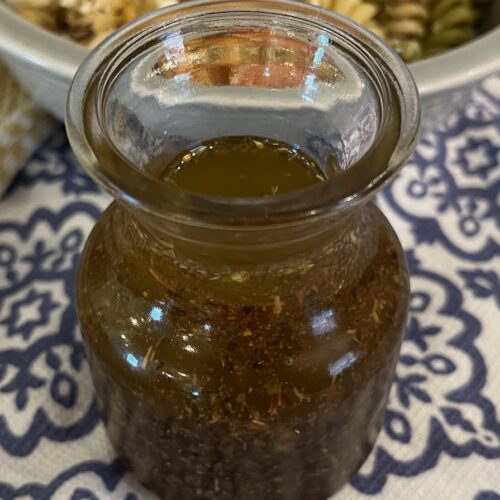
Basic Vinaigrette Salad Dressing
Ingredients
- 1/3 cup olive oil
- 2 tablespoons balsamic vinegar or red wine vinegar
- 1 teaspoon Italian seasonings
- salt and pepper to taste
Instructions
- Add all of the ingredients to a bowl. Whisk using elbow grease and long enough so that the ingredients blend together well.
- Transfer to a serving container to pour over your salad and enjoy. Store leftovers covered in the refrigerator.
Notes
Nutrition
Disclaimer
Please note that nutrient values, if included with the recipe, are estimates only. Variations can occur due to product availability/substitution and manner of food preparation. Nutrition may vary based on methods of origin, preparation, freshness of ingredients, and other factors.